
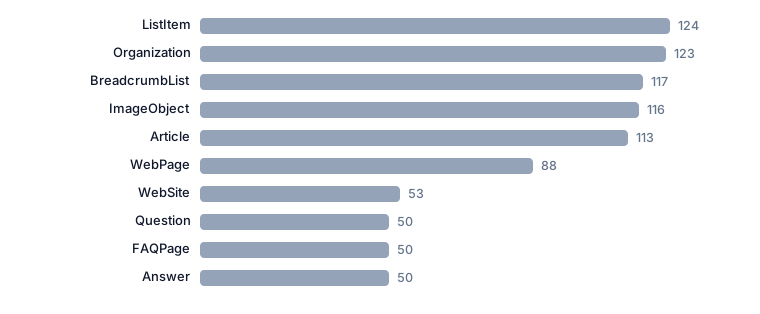
People assume Google quietly merges every version of your brand name into one clean entity. The public docs don't say that. Google's guidance on entities is thin, and it never promises to reconcile variant names for you. That gap is where the three names problem lives. Your brand shows up as "Acme Solutions," "Acme Solutions Ltd," and "AcmeSol" across the web, and search engines and AI answer engines may treat those as separate things.
Entity consistency means using the same name, the same identifiers and the same description everywhere your company appears. That way machines can tie those mentions to one real organisation. This piece busts the common myths about name variants and gives you a practical path to fix the ones that matter.
Search engines don't merge name variants for you; they read the signals you give them
People assume that if your homepage says "Acme Solutions," Google will work out that "Acme Solutions Ltd" on Companies House and "AcmeSol" on LinkedIn are the same company. It might, eventually. But Google has published nothing that promises it.
What search engines actually use is signals: consistent names, matching URLs, structured data, and cross-references from sources they trust. Google's Search Quality Rater Guidelines describe an entity as "a person, place, or thing" and tell raters to check whether a page clearly identifies the entity it's about. That's a quality guideline for human raters, not a merging promise. OpenAI's model documentation doesn't publish entity-merging rules either. So you can't count on automatic reconciliation.
Treat name variants as a data problem you own. The more consistent your signals, the better the odds machines connect them. There's no promise of a fix, and you shouldn't wait for a silent one.
One canonical name isn't enough; you need a registry that lists your aliases
Picking one name and erasing every other variant is risky. Some variants are legitimate. A legal suffix like "Ltd" or "GmbH" is required on official documents. A stock ticker is a valid alias. A common misspelling may carry its own search volume. The goal isn't to kill variants. It's to declare which one is canonical and list the rest as known aliases.
Build a simple alias registry. That's a table mapping each variant to the canonical name and noting where it appears. Here's a template you can copy into a spreadsheet.
| Variant | Canonical? | Where it appears | Action |
|---|---|---|---|
| Acme Solutions | Yes | Website, press releases | Keep as primary |
| Acme Solutions Ltd | No | Companies House, invoices | Keep as legal alias; add to schema |
| AcmeSol | No | LinkedIn handle, Twitter | Keep as social alias; link to canonical |
| Acme Solution | No | Some directory listings | Fix where possible; monitor |
The registry becomes your source of truth. When you update a directory or publish a new page, check it against the registry. It's also the input for structured data, because you can list aliases in schema.org markup.
Schema.org markup helps, but it won't force a merge
The Organization type in schema.org lets you declare a name, legalName, alternateName, and sameAs links to authoritative profiles. That's useful. Google's documentation on Organization structured data says it uses the markup to understand your organisation and may show it in knowledge panels. It doesn't say adding alternateName will force every variant to merge.
Here's what the schema.org vocabulary actually defines. Organization has name (the common name), legalName (the registered legal name), alternateName (other names the organisation is known by), and sameAs (URLs to pages that unambiguously identify the entity). These are declarations, not commands. Search engines may use them as signals.
Use structured data to declare your canonical name and aliases. Don't expect it to override contradictory mentions elsewhere. If ten directories say "Acme Solution" and your schema says "Acme Solutions," the inconsistency is still there. Schema is one layer. The audit and the cleanup are the others.
Some variants are legitimate and worth keeping
Not every variant is a problem. Legal suffixes, stock tickers, and common abbreviations can help people find you. The trouble comes from uncontrolled variants: misspellings, outdated names, and inconsistent punctuation that add entity noise. Entity noise means extra signals that make it harder for machines to connect mentions to one entity.
Fix by impact. Start with variants on high-authority sites like Wikipedia, LinkedIn, and major directories. Fix variants that are outright wrong, such as the wrong city or the wrong service. Leave harmless abbreviations alone if they clearly link to the canonical name. A variant with a link to your canonical site does less harm than one without.
There's no public ranking factor called "entity consistency." Google's ranking systems aren't documented to include it directly. Consistency supports clarity, and clarity supports how your site is understood. Treat it as hygiene, not a growth hack.
You can't fix what you haven't found, so audit first
Start with a manual audit using free tools. Search your brand name in quotation marks on Google and Bing. Check the first five pages of results. Note every variant that shows up in titles, snippets, and URLs.
Then check the major data sources: your LinkedIn company page, Wikipedia if you have one, Companies House or your local business register, industry directories, and review sites. Log each variant in a spreadsheet, along with the URL where it appears and whether it links to your canonical site. This isn't a one-time job. Set a quarterly reminder.
For a deeper check, use Google Search Console to see which queries bring up your brand and whether people use variant spellings. The data is aggregated and anonymised, but it can reveal patterns.
Fix or ignore: a simple rule for each variant
When you find a variant, decide whether to fix it or leave it. If the variant sits on a page you control, fix it to match the canonical name or add it as a declared alias. If it's on a third-party site, ask for a correction only when the variant is materially wrong: wrong legal name, wrong location, or a misspelling that changes meaning. For minor punctuation differences, leave them unless they cause confusion.
If the variant belongs to a same-name competitor, you can't fix it. Strengthen your own entity signals instead. Add more sameAs links to authoritative profiles, publish clear About pages, and use structured data. The goal is to make your entity distinct, not to erase the other one.
Write your decisions down in the registry. That record helps when new team members join or when someone asks why a variant was left alone.
Track brand queries and AI answers, not a made-up entity score
After you fix variants, check whether anything changed. There's no public metric for entity consistency. You can watch three things: how many variants appear in search results for your brand name, the click-through rate to your site from brand queries, and whether knowledge panels or AI answers show the correct name.
Use the Performance report in Google Search Console to track brand queries. Compare the three months before and after your cleanup. Look for fewer variant queries and more canonical ones. That's a signal, not proof.
For AI answer engines, query the model with your brand name by hand and see which name it uses. Do that monthly. There's no API for entity consistency, so manual checks are the practical option.
If X then Y: the decision summary
If your brand name appears with more than two variants on high-authority sites, build an alias registry and fix the top five by impact. If your legal suffix differs from your trading name, declare both in schema.org Organization markup using name and legalName. If a variant belongs to a same-name competitor, strengthen your own sameAs links and About page rather than trying to erase them. If you have no structured data, add Organization markup with name, alternateName, and sameAs. If you've fixed variants but see no change in search results after three months, check whether the old variants still appear on third-party sites and request corrections there.
Key Facts at a Glance
- No public Google documentation promises automatic merging of brand name variants; treat consistency as a signal you control.
- Schema.org Organization supports name, legalName, alternateName, and sameAs; use them to declare your canonical name and aliases.
- Build an alias registry to map every variant to its canonical form and decide whether to fix or ignore it.
- Prioritise fixes on high-authority sites and material errors; leave harmless abbreviations alone.
- Measure success with brand query data in Search Console and manual AI model checks, not with a dedicated entity metric.
What are brand name variants in SEO?
Brand name variants are different versions of your company name that appear online, such as legal suffixes, abbreviations, misspellings, or outdated names. They matter because search engines and AI systems use names to connect mentions to one entity.
How does entity consistency affect AI search results?
There's no public documentation from OpenAI, Google, or others that says entity consistency directly changes AI answers. The practical effect is that consistent names make it easier for systems to connect your content to your organisation. Inconsistent names may cause confusion, but the exact impact isn't published.
Can structured data fix brand name conflicts?
Structured data helps by declaring your canonical name and aliases, but it doesn't override contradictory mentions elsewhere. Google's documentation on Organization markup says it uses the data to understand your organisation, not that it forces a merge. Use schema as one layer alongside cleanup.
How do I audit my brand's entity consistency?
Start with a manual search for your brand name in quotation marks on Google and Bing. Log every variant you find in titles and snippets. Check major sources like LinkedIn, Wikipedia, and business registers. Use a spreadsheet to track each variant and whether it links to your canonical site.
How long until entity fixes show results?
There's no public timeline. Search engines and AI systems update at different rates. A reasonable approach is to check brand query data in Search Console after three months and manually query AI models monthly. If old variants persist on third-party sites, request corrections there.
Sources (checked 2026-10-27): Google Search Central: Introduction to structured data · W3C: JSON-LD 1.1 specification.