
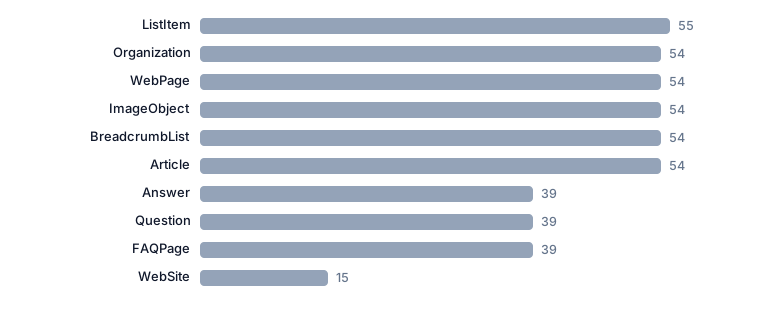
The three names problem starts with a simple split: one company, one legal name, and three or more public names that all describe it. Put simply, a brand name variant is any written form of your name that differs from the canonical one you want engines to attach to your entity. The myth is that a single schema tag fixes this. It doesn't. What public documentation actually describes is a reconciliation job across pages, citations and structured data.
Myth vs Evidence: One Schema Tag vs a Whole Web of Signals
The common claim is that adding an Organization schema block with alternateName tells search engines and AI answer engines that all your variants are one entity. The evidence is narrower. Schema.org defines alternateName as "an alias for the item" (schema.org/alternateName). It gives you a place to declare an alias. It does not state that any engine will merge your entity automatically.
Google's own documentation on Organization structured data lists alternateName as a supported property. Google also says structured data helps it understand page content, and separately warns that markup must match visible content. That is the whole public promise: help understanding, not an assured merge.
So the correction is this: structured data is a declaration, not a resolution. Engines reconcile entities from many sources, and your markup is one input among them. Treat it as a vote, not a switch.
Entity Consistency SEO vs Keyword SEO: Different Job, Different Check
Entity consistency SEO is the practice of making the same real-world thing (your company) look the same across every place it appears: your site, directories, press mentions, social profiles and structured data. Keyword SEO chases phrases. Entity work chases agreement.
The reason agreement matters is how retrieval works. Search engines and AI answer systems need to decide which pages talk about the same organization before they can cite it confidently. Public platform documentation describes entities and knowledge sources, but none of the major engines publishes the exact reconciliation logic. That gap is where most myths grow.
Here's the practical difference. A keyword page can rank while your name still appears three ways across the web. An entity check fails the moment a directory lists "Acme Ltd" while your site says "Acme Group". The keyword job is done; the entity job isn't.
What Public Documentation Says vs What People Assume
People assume three things that the documentation doesn't support. First, that a knowledge panel is a right you can claim. Google's documentation on knowledge panels describes them as automatic and generated from public sources; there is no claim form. Second, that Wikidata or a schema block forces a merge. Neither source promises that. Third, that misspellings hurt rankings directly.
On misspellings, Google's public guidance on spelling and synonyms is about matching queries, not about penalising brands. A misspelling in a directory is a signal conflict, not a ranking penalty. The harm is confusion for the reader and for any system trying to attach facts to one name.
What the documentation does support is consistency. Schema.org's sameAs property (schema.org/sameAs) lets you point to URLs that identify the same thing. That is a verifiable declaration you can make today. It is still a declaration, not a promise.
Audit Step vs Guess: A Concrete Variant Check
Guessing which variants exist is the usual failure. A structured audit takes about two hours for a small B2B site. Run these steps in order and record every result in one sheet.
- Step 1: List every written form of your name you already know, including legal name, trading name, abbreviations and common misspellings.
- Step 2: Search each form in quotes on Google and Bing. Note which domains appear and whether your canonical site is among them.
- Step 3: Check your own site: title tags, footer, About page, contact page, invoice templates and email signatures.
- Step 4: Check third-party sources: Google Business Profile, LinkedIn, Crunchbase, trade directories, Wikidata if present.
- Step 5: Pull your Organization schema and compare every name field against your canonical list.
- Step 6: Ask a colleague who doesn't work in marketing to write your company name from memory. Record what they write.
Step 6 is the one most teams skip. It surfaces the variants your own staff use internally, which often leak into public pages.
Cross-Language vs Transliteration Variants: A Separate Problem
If you trade in more than one language, you have a second layer. A transliteration is the spelling of your name in another script or alphabet. A translation is a different word entirely. These are not the same problem and they need different handling.
For transliterations, pick one official form per script and use it everywhere, including on the language-specific version of your site. For translations, decide whether the translated name is a brand name or a description. If it's a brand, treat it as a canonical name in that language and declare it with alternateName on the relevant language page. If it's a description, it doesn't belong in your name fields at all.
No public engine documentation confirms how transliterated variants are matched. Treat this as a consistency task you control, not a ranking lever you can pull.
Scoring vs Sorting: How to Rank Name Conflicts
You will usually find more conflicts than you can fix in a week. Score each one instead of sorting by gut feel. Use three factors, each scored 1 to 3, and multiply them for a priority score out of 27.
| Factor | Score 1 | Score 2 | Score 3 |
|---|---|---|---|
| Traffic or citation weight of the source | Low-traffic directory | Moderate source | High-authority or high-traffic source |
| Distance from canonical name | Minor punctuation or spacing | Abbreviation or short form | Different word or wrong legal suffix |
| Ease of correction | You control the page | Self-serve edit form | Requires a support request |
Fix the highest scores first. A wrong legal suffix on a high-authority source you control is a 3x3x1 score of 9 and takes ten minutes. A minor spacing issue on a low-traffic directory you don't control scores 1 and can wait. This is an illustrative scoring method, not a published standard; adjust the weights to your own situation.
Structured Data vs Citations: Which Fixes What
Structured data and citations do different jobs, and confusing them wastes time. Structured data declares relationships on pages you control. Citations place your name and details on pages you may not control.
Schema.org's Organization type supports name, legalName, alternateName and sameAs. Use legalName for the registered name, name for the trading name, alternateName for accepted variants, and sameAs for profile URLs. Keep all of them matching visible page content, because Google's structured data guidance requires markup to reflect what users see.
What structured data cannot do: correct a third-party directory, remove an old press mention, or force a knowledge panel. Those need citation work, meaning outreach or self-serve edits on the source itself. If a variant lives on someone else's domain, markup on your domain won't touch it.
Before vs After: What Changes and What Doesn't
After a reconciliation pass, expect visible changes on pages you control within days: one name form, consistent schema, matching footers. Expect slower change on third-party sources, because edit requests depend on other people's response times.
What won't change is your ranking directly. There is no public evidence that fixing a name variant lifts rankings. The realistic outcome is cleaner signals, fewer contradictory facts, and a lower chance that a system attaches the wrong detail to your brand. That is a risk reduction, not a growth tactic.
To measure it, track three things monthly: the number of distinct name forms found in a fixed set of searches, the number of sources still showing a deprecated name, and whether your own site pages agree with each other. Record the same checks on the same date each month so you compare like with like.
Key Facts at a Glance
alternateNamedeclares an alias; no public documentation promises an automatic entity merge.legalNameis for the registered name,namefor the trading name,sameAsfor profile URLs (schema.org).- Structured data only affects pages you control; third-party variants need edits at the source.
- Score conflicts on source weight, distance from canonical, and ease of fix; multiply the three.
- Knowledge panels are generated automatically from public sources; there is no claim form (Google documentation).
- Measure monthly on a fixed date: distinct name forms, stale sources, on-site agreement.
What causes brand name confusion in AI search results?
Mostly inconsistency across sources: a legal name on a registry, a short form on social profiles, and a misspelling in a directory. Systems that pull from public sources see conflicting strings and have to decide which one to trust.
How do I audit my brand's entity consistency?
Search each known name form in quotes on Google and Bing, check your own pages and schema, check major third-party profiles, and ask a non-marketing colleague to write your name from memory. Record everything in one sheet.
Can structured data alone fix entity disambiguation?
No. Schema.org properties like alternateName and sameAs let you declare aliases and identity links, but they only apply to pages you control. Third-party variants need correction at the source.
How do I prioritize which brand variants to fix first?
Score each conflict on three factors: the source's traffic or authority, how far the variant is from your canonical name, and how easy it is to fix. Multiply the scores and work from the top.
How do I measure whether entity disambiguation worked?
Track the same three checks monthly: the number of distinct name forms appearing in a fixed set of searches, the count of sources still showing a deprecated name, and whether your own pages and schema agree.
If you control the source, fix it this week. If you don't control it, send the edit request and log it. If a variant is only a spacing issue on a low-traffic page, leave it and spend the time on your schema instead. If you trade in multiple scripts, pick one official form per script before you touch anything else.
Primary documents: Google Search Central: Organization structured data and schema.org: alternateName.